Did They Even Have a Case Against Your Place? The Signal-Path Decoder
A demand from a signal-piracy enforcer names a federal statute and a number and treats both as settled. Neither is. Whether the statute it cites actually reaches what your establishment did is a factual question, and two facts decide most of it: how the feed reached your screens, and on what kind of account. The type of business, whether a sports bar, a neighborhood bar, a restaurant with a few televisions, a lounge, or a gym, rarely changes the answer.
This page walks those facts, most-decisive question first, to one of three honest reads: the statute’s conditions appear met as you answered them, the statute may not reach these facts, or the facts are not enough to tell yet. It never returns a bare “you are liable” or “you are in the clear,” and it never names a dollar figure for your situation. It shows you which law could even be in play before you spend money deciding what to do.
What You Need to Know
- Two facts do the work: how the feed reached the screen (a satellite dish, a cable box, or an internet app) and on what account (residential subscription or commercial license). The kind of establishment rarely matters.
- Signal path selects the statute. A satellite feed falls under 47 U.S.C. §605; a cable feed falls under 47 U.S.C. §553. It is decided by the path, not the dollar amount a letter leads with.
- Paying a residential bill does not license a commercial showing. “I paid my DIRECTV or YouTube TV bill” is the most common misconception here, and it is wrong: residential accounts are for personal, non-commercial use.
- “It was just streamed on an app” is not automatically a clean escape. Courts are split on whether §§553/605 reach an internet stream at all, but the event’s copyright owner can bring a separate claim that does reach it. That is the wall the internet defense runs into.
- Willfulness changes the size of the problem, not just whether there is one. A residential account rolled into a business and a knowingly unauthorized “gray” feed sit at opposite ends of that scale.
- The decoder is a browser-only self-check. It decodes which statute could apply; it does not adjudicate liability, compute what you owe, or replace a lawyer.
Check Your Own Signal Path
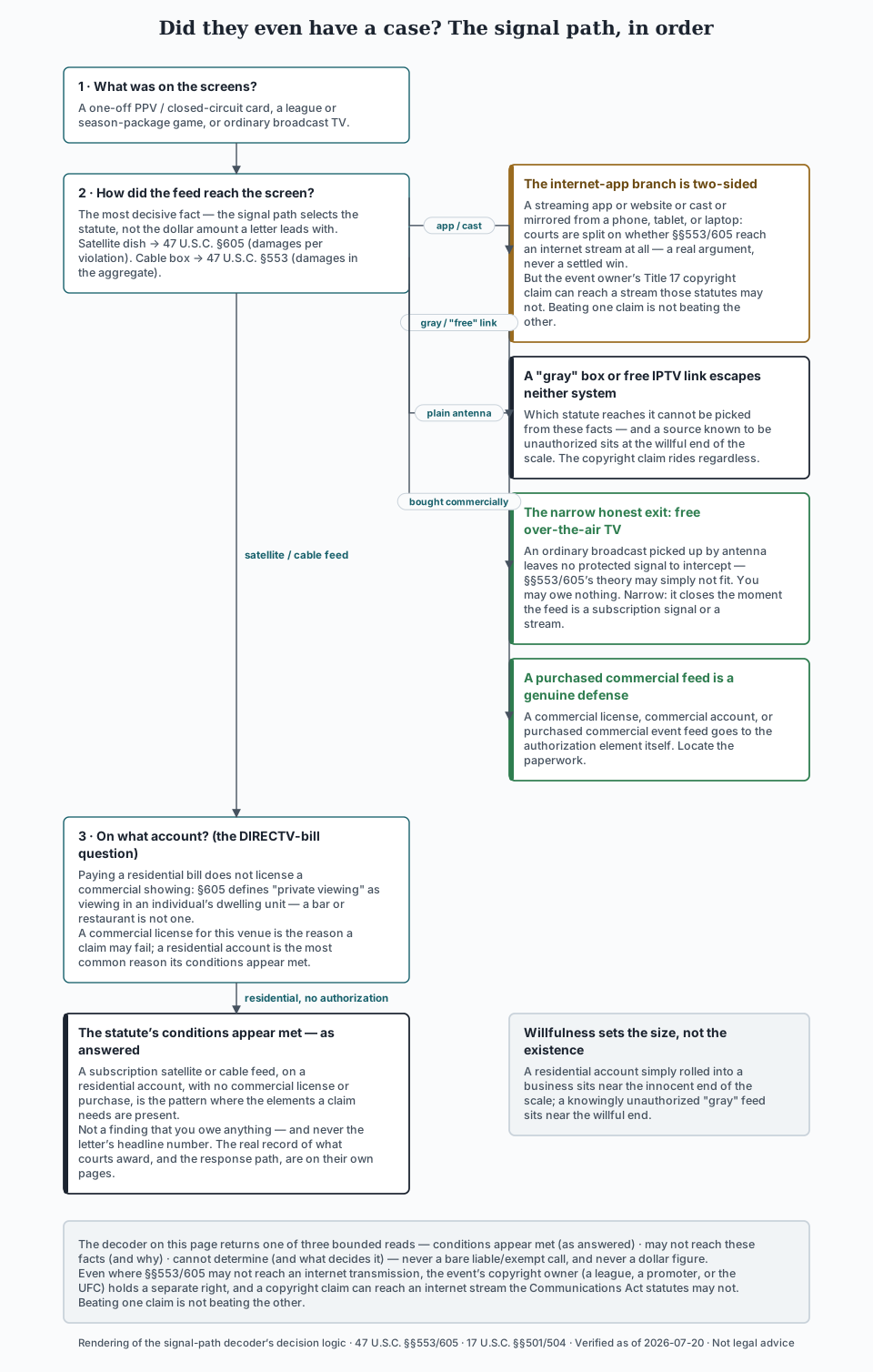
The decoder below asks, in order, what you showed, how the feed reached the screen, whether anything was cast to the screen when a dish or box was involved, what account carried the feed, and whether any commercial license or authorization existed. It short-circuits the branches that end early and returns one of three reads with the reason behind it. It produces no output that leaves your browser.
About this check: it runs entirely in your browser. Nothing you enter is sent anywhere, stored, or logged. It is free and never gated. It is an educational self-check that decodes public statutes and applies them to a general situation. It is not legal advice, it does not decide whether you are liable, and it names no dollar figure for your case. If you have been served with a lawsuit, the decoder is not the tool for that moment: consult a licensed attorney.
In plain language, the same logic reads as the sections that follow.
How the Feed Reached the Screen
This is the first and most decisive branch, because it selects the statute. The two signal-piracy statutes are built around two delivery systems, and a claim under the wrong one is a claim about the wrong facts.
A Satellite Dish
A feed delivered by satellite falls under §605, which governs the unauthorized reception of satellite and radio communications, and computes its damages per violation. The decoder’s job is to tell you §605 is the statute in play; what §605 actually does, including that per-violation structure, is on the law page.
A Cable Box
A feed delivered over a cable system falls under §553, which reaches anyone who “shall intercept or receive or assist in intercepting or receiving any communications service offered over a cable system” without authorization. §553 is built differently from §605: its statutory damages are computed for all violations in the aggregate, not per violation, and its fee and enhancer provisions differ. Which statute applies turns on whether the feed arrived by cable or satellite; the full comparison is on the law page.
An App, a Phone Cast, or an Internet Stream
This is the branch the results you have been reading tend to bury, and the one where a half-answer is dangerous. §§553/605 are written around cable and satellite signals, and courts are split on whether they reach an internet or app stream at all: one line of cases reads the statutes to cover cable and satellite only, while some courts have gone the other way. That split is real and unsettled, and its current state is the kind of thing that changes, so treat the app defense as an argument worth raising, never a settled win.
Here is what the split leaves out, and why “it was streamed” is not a clean escape. Even where §§553/605 may not reach an internet transmission, the event’s copyright owner (a league, a promoter, or the UFC) holds a separate right. Under 17 U.S.C. §501, “anyone who violates any of the exclusive rights of the copyright owner … is an infringer of the copyright,” and §504 can let that owner recover statutory damages. A copyright claim can reach an internet stream the Communications Act statutes may not, and §605 itself says nothing in it “shall affect any right, obligation, or liability under title 17.” So the internet-app branch is two-sided: the signal-piracy statutes may not reach it, but copyright still can. Beating one claim is not beating the other, and how copyright damages work is on the law page.
A “Gray” Box or a “Free” IPTV Link
A feed that arrived through an unauthorized device or an unlicensed “free” stream escapes neither system. It sits under the same signal-path analysis, points toward the willful end of the scale below rather than the innocent one (using a source known to be unauthorized is the fact pattern most likely to be treated as knowing), and does not answer the copyright claim any more than the app branch does. This page explains where such a feed lands in the analysis; it does not tell anyone how to obtain one, hide one, or make one harder to trace, which is not what a self-diagnostic is for.
An Ordinary Over-the-Air Broadcast
There is a genuine branch that can exit the statute. If what you showed was a free over-the-air broadcast picked up by antenna, not an encrypted or subscription satellite or cable feed, the unauthorized-interception theory §§553/605 rest on may simply not fit, because there was no protected signal to intercept. This is the honest “you may owe nothing” case. It is also narrow: most establishments are not showing a marquee event over free antenna television, and the moment the feed is a subscription signal or an internet stream, this exit closes. The small-business “size and speaker” exemption some owners have read about is a music-licensing rule for a different kind of letter; it does not exempt a signal-piracy or broadcast-copyright showing.
On What Account: The DIRECTV-Bill Question
Once the signal path selects the statute, the account decides whether the showing was authorized at all, and this is where the most common and most expensive misconception lives. Paying a residential DIRECTV, cable, or YouTube TV bill does not license a commercial showing. Residential accounts are sold for personal, non-commercial use: §605 defines “private viewing” as “the viewing for private use in an individual’s dwelling unit …,” which a bar or restaurant is not. Exhibiting the same feed in a commercial establishment is a separate commercial right the distributor sells separately, usually at a higher rate.
So “I paid my bill, how is this illegal” has a direct answer: the bill bought the home version of the right, and the showing used the commercial version, which was not bought. An account that was residential when the event aired is the single most common reason a claim’s conditions appear met. An account that was already a commercial license, or a purchased commercial feed for the event, is the reason a claim may fail.
What This Means for You
- If the feed was on a residential account, the “I paid for it” belief does not resolve the claim in your favor. It is worth understanding the real structure before you respond to anyone.
- If you held a commercial license or bought a commercial feed for the event, that is a genuine defense to the authorization element, and the paperwork proving it is worth locating before you do anything else.
Was Anything Purchased or Authorized?
The last input the decoder checks is whether any written commercial authorization existed: a commercial license for the venue, a commercial account with the provider, or a purchased commercial feed for the event. A documented “yes” moves a situation out of “conditions appear met” toward “the claim may not reach these facts.” A “no,” on a residential account, is the honest default: most establishments that showed a feed on a residential account are not exempt, and the useful move is not to guess but to understand the real exposure and the lawful way to show the next event, which is a commercial license rather than a residential subscription.
Willfulness: What Changes the Size of the Problem
Willfulness does not decide whether a claim exists; the signal path and the account do that. What it changes is the scale. The statutes carry a much larger enhancer when a violation was willful and for commercial advantage, and a real reduction, the innocent-violator floor, when the establishment “was not aware and had no reason to believe” it was violating the law. A residential account simply rolled into a business sits near the innocent end; a knowingly unauthorized “gray” box or stripped device sits near the willful end. The dollar depth of that scale is on the law page; what matters here is that the same conduct can land very differently depending on what the establishment knew.
The Three Reads the Decoder Gives You
The decoder never tells you that you are liable or that you are exempt. It returns one of three reads, each with the facts it rests on:
- The statute’s conditions appear met, as you answered. A subscription satellite or cable feed, on a residential account, with no commercial license or purchase, is the pattern where the elements a claim needs are present. This is not a finding that you owe anything, and it is not the maximum a demand letter names. What such a read actually tends to cost, as opposed to what letters threaten, is on how these cases resolve and what venues really pay; the response path is on how to respond to a demand letter.
- The statute may not reach these facts. An internet or app stream (where §§553/605 may not reach it, though copyright still can), a genuine free over-the-air broadcast, or a showing actually on a commercial license or purchased commercial feed. Each is a real reason a signal-piracy claim can fail on its own terms, and each carries the caveat named above.
- The facts are not enough to tell yet. If you do not know how the feed reached the screen, or whether the account was residential or commercial, the decisive fact is missing. It is worth confirming the signal path and the account from your own provider records before concluding anything.
If They Have the Wrong Place or the Wrong Event
One branch sits outside the decoder’s logic entirely. If the demand names a business, address, or event that is not yours, this is a mistaken-identity or wrong-event problem, not a signal-path question, and the move is to confirm the facts and respond correctly rather than stay silent. The response path is on how to respond to a demand letter.
Where to Go From Here
- The statutes in depth: the per-violation-versus-aggregate structure of §§553/605, and how copyright overlaps them, are on the law page.
- A “conditions appear met” read: see how these cases resolve and what venues pay, then how to respond to a demand letter.
- The full picture: start at the hub on getting a letter or being sued over a game you showed. The full set of options once you have your read is on your real options.
- Showing the next event lawfully: the fix is a commercial license for the venue rather than a residential account; the specific licensing procedure is on how to show it legally.
Frequently Asked Questions
How Do I Know If They Even Have a Case Against My Bar?
It turns on two facts. First, how the feed reached your screens, which decides the statute: a satellite feed falls under 47 U.S.C. §605, a cable feed under §553. Second, what account carried it: a residential subscription does not license a commercial showing, while a commercial license or purchased commercial feed can defeat the authorization element. A subscription feed on a residential account, with no commercial license, is the pattern where a claim’s conditions appear met. The type of establishment rarely changes the answer.
Does Paying My DIRECTV or Cable Bill Mean I Am Covered?
No. A residential DIRECTV, cable, or streaming bill buys the right to watch at home, not to exhibit commercially. Residential accounts are sold for personal, non-commercial use, and §605 defines private viewing as viewing in an individual’s dwelling unit. Showing the feed in a bar or restaurant uses a separate commercial right the distributor sells separately. This is the most common misconception in these cases, and an owner who genuinely believed the bill covered them can still be liable.
It Was Streamed on an App or a Phone. Doesn’t That Mean They Have No Case?
Not on its own. Courts are split on whether §§553/605 reach an internet or app stream at all, because those statutes are written around cable and satellite signals. But even where they do not, the event’s copyright owner can bring a separate claim under Title 17, which does reach a stream. So an app or internet feed is a real argument against the signal-piracy claim and, at the same time, not an answer to the copyright claim. Treat it as an issue worth raising, not a guaranteed win.
Can This Tool Tell Me How Much I Owe or Whether I Will Win?
No, by design. The decoder identifies which statute could apply and which issues are in play, from the facts you enter. It does not compute a dollar figure, decide whether you are liable, or serve as legal advice. A “conditions appear met” read is not a finding that you owe anything, and it is not the maximum a demand letter threatens. What these cases actually resolve for, and how to respond, are on their own pages; a served lawsuit is a lawyer’s to handle.
What If I Do Not Know How the Feed Reached the Screen?
Then the decisive fact is missing, and the honest read is that you cannot tell yet. Whether the feed came by satellite, cable, or an internet app, and whether the account was residential or commercial, are what decide the analysis, and they are usually confirmable from your provider records or account paperwork. Confirming them beats guessing, because the entire read changes with them.